
The Federal Reserve’s Open Market Committee meets April 29 to decide on interest rates, likely the last meeting chaired by Jay Powell before his term ends May 16.
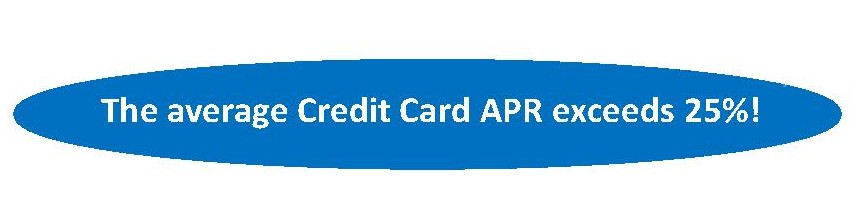
Credit card debt, one area greatly affected by interest rates, continues to rise. By the end of 2025, U.S. credit card balances reached $1.28 trillion, with an average interest rate exceeding 25%.
While some banks have managed low or even zero delinquencies, others are seeing rising stress.
JRN by Bauer 43:16
Easy to Swipe, Harder to Pay
The Federal Reserve’s Open Market Committee meets on Wednesday (April 29th) to decide what, if anything, should be done to the Fed Funds rate. This should be Jay Powell’s last meeting as Chairman as his term expires May 16th, and the next meeting is not until June 17th.
Although Powell’s chairmanship is expiring, he is scheduled to continue on as a board member until 2028. Kevin Warsh, Trump’s pick to be the new head of the Fed, remains in the throes of the Senate confirmation process.
Regardless of the outcome and timing of the drama surrounding that process, Powell, as the outgoing Fed Chair, indicates rates will stay higher longer. Warsh, as the presumed incoming Chair, indicates rates will likely come down sooner rather than later. Only time will tell.
The Fed Funds rate ultimately determines the prime rate and thus the rates that banks charge on loans. Two types of loans that fluctuate directly based on these rates are credit cards, which we will discuss today, and adjustable-rate mortgages (ARMs), which we will address next week.
The Federal Reserve Bank of New York reported that credit card balances rose $44 billion in the fourth quarter of 2025 to end the year at $1.28 trillion. It’s a staggering number, but it does not differentiate between credit card charges that are “convenience” and those that are need-based.
Convenience credit cards are often used to earn miles or other rewards. Cards are also easier to carry than a wad of cash and certainly less cumbersome than paying by check. Convenience charges, whether swiping, tapping or on a computer, are likely paid off monthly so they don’t incur interest charges at all.
However, if and when personal debt gets out of hand, these are also likely to be the first monthly payments to be kicked down the road. Let’s face it, if you have to choose between: a) paying your credit card off or b) paying less than the full amount on your card and buying needed food or medicine, option b is going to win every time.
That’s one reason Americans are carrying more credit card debt and watching their credit scores fall (source: Experian Mar. 30, 2026). At the end of 2025, the 50 banks listed on page 5 reported nearly $1.18 trillion in outstanding credit card debt combined.
Some of them, like 5-Star Bancorp Bank, N.A., Sioux Falls, SD (35444) and 5-Star Stride Bank N.A., Enid, OK (4091) reported no delinquent credit card loans at the close of 2025. That’s impressive, especially for Stride Bank, which has almost $2.2 billion in credit card loans outstanding. However, most others cannot say the same.
4-Star Coastal Community Bank, Everett, WA (34403) reported a 25% increase in credit card balances during calendar 2025 to $684 million. Yet, it managed to reign in its nonperforming credit loans (90 days or more past due or in nonaccrual status). Not a lot (1.75%) but progress is progress. As a result, its delinquent credit card rate dropped from 8.2% to 6.4%.
In the case of 3½-Star Merrick Bank, South Jordan, UT (34519) credit card balances increased 70% during 2025 while nonperformers increased over 30%. As a result, its delinquent credit card rate dropped from 6.7% to 5.1%.
These examples are outliers. According to the New York Fed Consumer Credit Panel/Equifax Data Report, credit card balances increased about 5.5% in 2025 whereas credit cards transitioning into nonperforming accounted for just over 6% of the total.
Accounts transitioning the fastest are held by 18-29-year-olds. According to FICO, 48% of these Gen Z young adults say they used credit cards and Buy Now Pay Later (BNPL) to make ends meet in the past year. The report goes on to say that 37% of Gen Z are only making minimum payments on their credit cards while 14% are paying less than the minimum.
The FICO Blog put a positive spin on these numbers. We’re not so quick to do so. Refer to our blog post “How Financially Literate Are Your Really?” to find out why.
But there is hope. There are two great tools that can help anyone manage their credit card debt. The first is The Schumer Box (named after Senator Chuck Schumer).
The Schumer box is on every “paper” credit card statement you receive. It provides interest rate information (Purchase APR vs. cash advance APR and Balance Transfer APR); fee information (annual fees, balance transfer and late fees, returned payment and foreign transaction fees) as well as minimum finance charges. Many also tell you how much you will pay in interest and how long it will take to pay off your balance if you pay just the minimum.
If you can’t find that last information on your statement, Experian has a calculator that is available to everyone. Simply enter the card balance, APR and any amount for the monthly payment. It will calculate when your debt will be paid off and how much interest you will spend (or save, hopefully). This is a very useful tool for anyone who carries a credit card balance, regardless of age or generation.
1 comment on “Easy to Swipe, Harder to Pay”
Comments are closed.